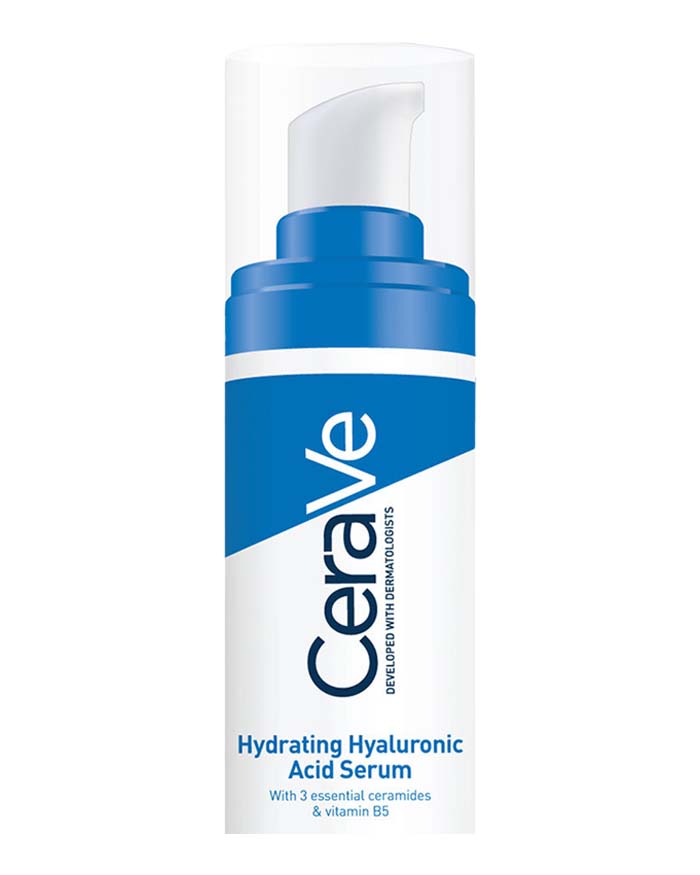
When used as a regular part of your skincare routine, face serums can provide many benefits such as increased hydration or a reduction in uneven skin tone. CeraVe facial serums have ingredients such as Hyaluronic Acid and Encapsulated Retinol, alongside our skin-identical three essential ceramides.
Product Results
Compare Serum details


FAQ
Stay informed on all things skincare and find the answers to top CeraVe questions.
SEE MORE FAQS-
Many face serums are designed for once-daily or twice-daily application. However, every serum comes with its own set of instructions that will tell you when and how often to apply it. Always read the product packaging carefully before applying your facial serum and use only as directed on the label. All CeraVe face serums are developed with dermatologists, gentle on your skin, and suitable for daily use. We recommend using your serum consistently for best results.
Can I use face serum every day?
-
Including a face serum in your skincare routine can be an effective way to achieve your skincare goals, but it's important to choose the right formula for your skin type and skin concerns. Those with dry, flaky skin, for example, may want to choose a serum with hydrating ingredients that can help replenish much-needed moisture, like hyaluronic acid. If dark spots or uneven skin tone are among your skin concerns, a brightening serum with vitamin C (like CeraVe Skin Renewing Vitamin C Serum) may be your best bet. For anti-ageing concerns, try facial serums formulated with ingredients such as retinol and AHAs (like lactic acid and glycolic acid). Those with oily, blemish-prone skin may benefit from a different kind of targeted treatment with blemish-fighting ingredients like salicylic acid. Regardless of your skin type or skin concerns, CeraVe recommends choosing serums that are gentle on your skin, fragrance-free, allergy-tested, and developed with dermatologists.
How do I choose a face serum?
-
In general, skincare products should be applied from the lightest, thinnest formulas to the thickest, heaviest formulas—this means that facial serum should usually be applied before moisturiser (unless otherwise directed on the product label). After cleansing and before moisturising, apply a thin layer of serum over your entire face and neck. Allow the serum to absorb fully before moving on to the next step in your skincare routine.
Should I apply serum or moisturiser first?
For daytime, we recommend applying a facial moisturiser with broad-spectrum sunscreen (SPF 30 or higher) after your serum, like CeraVe AM Facial Moisturising Lotion. In the evening, a nourishing facial moisturiser with niacinamide—like our PM Facial Moisturising Lotion—can make an excellent pick. Always refer to the instructions on your serum’s packaging and apply as directed. -
Face serums can offer many benefits when used as part of a well-rounded skincare routine. But remember: These products address specific skin issues, so the exact benefits of your serum will depend on the formula you choose. For example, you can find serums that are formulated to improve the appearance of dark spots, fine lines, wrinkles, and uneven skin tone or texture. Depending on your skin concerns, you can choose a face serum that primarily hydrates, firms, exfoliates, smooths, or brightens your complexion. CeraVe recommends choosing formulas that are developed with dermatologists, gentle on your skin, and fragrance-free.
What does face serum do?
-
Face serums are skincare products that are designed to target specific skin concerns, such as dryness and the appearance of dullness, fine lines, wrinkles, large pores, and uneven skin tone or texture. These products often feature concentrated formulas with a lightweight texture and complexion-enhancing ingredients. Popular serum ingredients include retinol, niacinamide, hyaluronic acid, alpha-hydroxy acids (AHAs) like glycolic acid and lactic acid, vitamin C, and beta-hydroxy acids (BHAs) like salicylic acid.
What is a serum?
-
Ceramides are lipids that are known to comprise up to 50% of your natural skin barrier. Think of them as the glue that holds your skin cells together to help seal in moisture and protect against impurities. Ceramides are vital to the health of your skin and play a key role in your skin’s protective barrier. Each of our products are formulated with three essential ceramides for exactly these reasons.
Why are Ceramides in Serum Beneficial to Skin?
Explore CeraVe products by category

Facial Cleansers
10 Products
Facial Moisturisers
10 Products
Body Cleansers
8 Products
Body Moisturisers
11 Products
facial serums
4 Products
Suncare
7 Products